


Straw Mulch
Straw Mulch
Certified organic wheat straw
Cover the soil. That is the whole job.
Mulch is not optional in a living soil. Bare soil dries out, crusts over, and the top inch stops working. You can cover it with almost anything and be better off than leaving it open.
So here is the honest version. If you have clean leaves, spent cover crop, or straw from a farm you trust, use it. We sell this for the growers who want to know exactly what is going on top of a soil they spent real money on. It is certified organic wheat straw from one local farm, never sprayed, and the certificate is on file if you need it.
Why it matters
What is happening at the surface
The surface is where a living soil is built or lost. Straw is the carbon half of that equation. Chopped cover crop and trimmed leaves are the nitrogen half. Put them together on top of the soil and the whole layer stays biologically active instead of baking.
1/2 to 1 in
and drop
layer
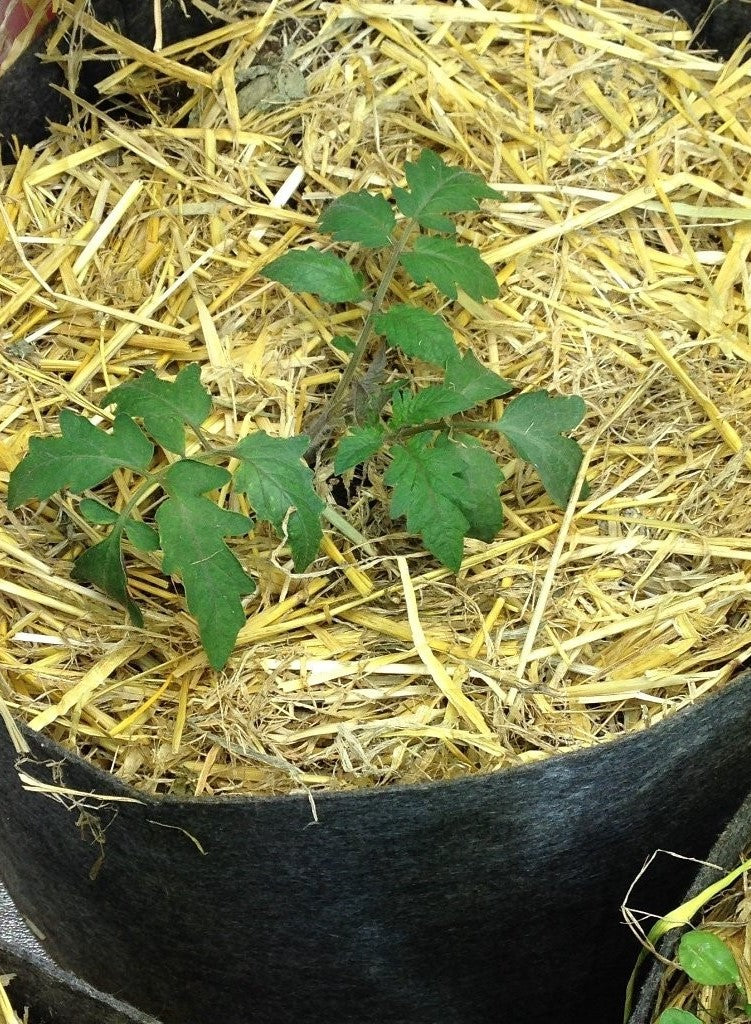
Cross section of a mulched container. Depths shown are typical, not a rule.
Read the bag
Most mulch is something else with mulch written on it
We are not going to tell you that our straw grows better plants than the straw down the road. What we will tell you is what is in the common alternatives, because a lot of it ends up on top of soil that people are very careful about in every other respect.
The dye is cosmetic. It keeps a landscape bed looking uniform, which is a perfectly good reason to buy it for a shrub border. It is a landscape product doing a landscape job. It is not made for a container you plan to eat out of, and that is the only question that matters here.
Cheap bagged wood mulch, dyed or not, is often ground pallets and construction scrap. Pallets are heat treated or chemically treated depending on where they came from, and reclaimed lumber can be anything. There is no sorting that out once it is chips in a bag. Around a shrub, fine. On top of soil growing food or cannabis, we would not.
Straw is a byproduct, so it carries whatever was applied to the grain crop. Growers have been running into persistent herbicide residue on hay and straw for years. Certification is the paper trail that says it was not sprayed.
Where it comes from
One local farm, bought by the truckload
Certified organic wheat straw. We buy monster bales by the full truckload from a local farm and store them on pallets under hay tarps so what you get is dry and clean, not the bottom of a bale that sat in the weather.
Every box is broken down and packed by hand out of those bales. If local supply ever moves us to another cereal straw, we will say so right here.
It is compressed, not fluffed. Baled straw is under real pressure and we do not fluff it before it goes in the box. A box holds noticeably more than it looks like it should once you pull it apart.
That is also why it is worth opening it into a tub before you spread it.
Two things you should know before you buy it
It has seeds in it and some of them will sprout. This is real straw, not a sterilized product, so you will get volunteer grass coming up through the layer. Deal with it early. Pluck the shoots while they are small, or turn the straw over on top of them and smother them. Left alone it gets clumpy and grows fast, and then you are pulling established root balls out of a mulch layer you would rather not disturb. If you want living roots at the surface on purpose, that is what a cover crop is for.
You may find thistle in it. Organically grown straw is produced with limited options for keeping other plants out of the field, so a hardy volunteer occasionally rides along in a bale. Thistle is prickly. Wear gloves when you are handling and spreading it.
Sizes and coverage
How much you need
| Size | At 1/2 inch, with cover crop | At 1 inch, no cover crop | Good for |
|---|---|---|---|
| 1/2 cubic foot | 12 sq ft | 6 sq ft | A small tent, a handful of fabric pots, houseplants |
| 1 cubic foot | 24 sq ft | 12 sq ft | The size most people reorder |
| 2 cubic foot | 48 sq ft | 24 sq ft | Raised beds, a full tent, mulching everything at once |
Square footage is straight math on the boxed volume, so treat it as a floor. The straw goes in compressed and we do not fluff it before packing, so a box opens up to more than the number says. Going deeper than an inch is fine, it just covers less ground. Mulching a whole outdoor garden? Buy it locally by the bale, or look at bulk sizing here.
How that translates to your pots
What matters is the soil surface, not the gallons. A wide short pot takes more straw than a tall narrow one holding the same volume. Diameters below are Grassroots Living Soil Pots.
| Pot | Soil surface | Pots per 1 cu ft box at 1/2 in | Pots per 1 cu ft box at 1 in |
|---|---|---|---|
| 7 gallon | 1.1 sq ft, 14 in across | About 22 | About 11 |
| 10 gallon | 1.4 sq ft, 16 in across | About 17 | About 8 |
| 15 gallon | 1.8 sq ft, 18 in across | About 13 | About 6 |
| 20 gallon | 2.2 sq ft, 20 in across | About 11 | About 5 |
| 30 gallon | 3.1 sq ft, 24 in across | About 7 | About 3 |
Beds are simpler. Multiply length by width. A 4 by 8 bed is 32 square feet, which one 2 cubic foot box covers at half an inch with room to spare.
How to use it
Four steps, and one that people miss
Wet it before you spread it
Dump the box into a tub or a five gallon bucket and moisten it with plain water. It knocks the dust down, it stops the straw from blowing around, and it is much easier to place.
Half an inch with cover crop, an inch without
If you are seeding a cover crop, keep it to about half an inch so the seedlings can push through. If you are not, go a full inch. Deeper is fine if you want it, and outdoors deeper is usually better, since wind and sun pull moisture off an exposed surface much faster than they do in a tent. Cover the whole surface out to the edge of the container either way. Gaps are where it dries out.
Top dress straight through it
This is the one people ask about. Do not pull the mulch off to feed. Sprinkle your amendment over the top of the straw and wiggle it down through the layer with your fingers until it reaches the soil surface, then water it in. The straw stays put, the food gets where it is going, and you have not disturbed the layer you spent weeks building.
Chop and drop into it
When your cover crop gets tall or you are trimming fan leaves, cut it and lay it right on the straw. Greens on top of browns. That is the layer building itself without you buying anything else.
Transparency
Documentation
We publish what we have and we say plainly what does not apply. If you need a document for a compliance file, ask us and we will send it.
Questions we actually get
Before you ask support
Grass is sprouting in my pots. Did I get a bad batch?
No, you got real straw. Straw carries seed and some of it germinates once it is sitting on warm damp soil. Do not leave it. Cereal grass grows fast and clumps up, and the longer you wait the more root you are tearing out of your mulch layer when you finally deal with it. Pluck the shoots while they are young, or flip the straw over on top of them and let it smother them. If you want something green growing at the surface on purpose, seed a cover crop that is meant for it.
How do I top dress once the straw is already down?
Sprinkle the amendment on top of the straw and work it down through the layer with your fingers until it hits the soil, then water it in. Do not rake the mulch off and start over. Same answer for worm castings, though with castings it helps to water a little more thoroughly so they settle onto the surface rather than hanging up in the straw.
There is thistle in my box.
It happens. Certified organic production means the farm has limited tools for keeping volunteers out of the field, so a prickly one occasionally makes it into a bale. Wear gloves when you spread it. If a box has more than a stray piece or two, email support and tell us.
Will it mold?
You will sometimes see white fungal growth in the straw layer, especially in a humid tent. That is fungal decomposition doing exactly what you put carbon on the surface for. It is normal in a mulched living soil.
How often do I need to add more?
Usually not until the next cycle. One good layer at the start carries most of a run, and it is supposed to thin out as it goes. That material is being eaten and handed back to the soil, which is the whole reason it is there. The exception is if you are lasagna mulching on purpose, stacking straw over greens over straw as you chop and drop through the round. Otherwise mulch once, then mulch again when you reset the container.
Pairs with
What people add next
Stop looking at bare soil
If you have been meaning to mulch since the last time you looked in the tent, that is today.
Need more than a few boxes? Bulk sizing is here.


Total items
Product subtotal